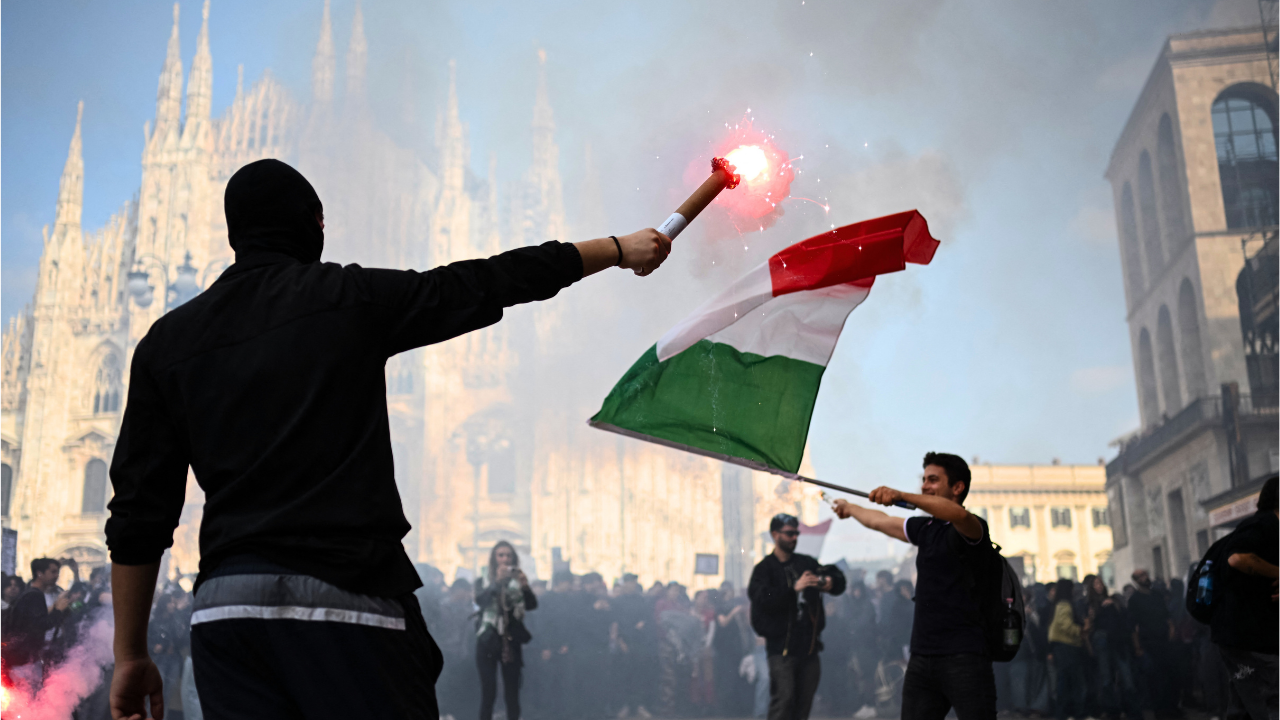
Protests have been sweeping across Europe, with countries such as France, Italy, Belgium, and Albania experiencing unrest and clashes. The protests initially began in France over school conditions and have since spread to other countries, with local grievances being the focus.
What happened
In France, President Emmanuel Macron has vowed to hold rioters accountable and make them pay for damages. The country deployed 70,000 police officers nationwide, resulting in over 1,300 arrests. Tear gas, sound grenades, and water cannons were used to disperse crowds, with some clashes breaking out in cities such as Paris, Lyon, and Toulouse.
Italy has taken a tough stance, with Prime Minister Giorgia Meloni condemning the violence and sending 500 additional soldiers to Milan. She has also approved tougher penalties for minors involved in vandalism. In Greece, police have maintained a visible presence at demonstrations, which have largely passed without major violence.
Belgium has accused Antifa-linked activists of stoking clashes, with nearly 200 people arrested. In Albania, student-led protests have grown into a broader challenge to the government, with demonstrators demanding the prime minister's resignation. Police have used tear gas and water cannons to disperse crowds, with over 2,500 officers deployed.
Spanish regional leaders have vowed consequences after riots in Barcelona, with 128 people arrested. The regional president has condemned the violence and backed the police response, while the mayor has warned that parents or guardians could face consequences for damage caused by their children.