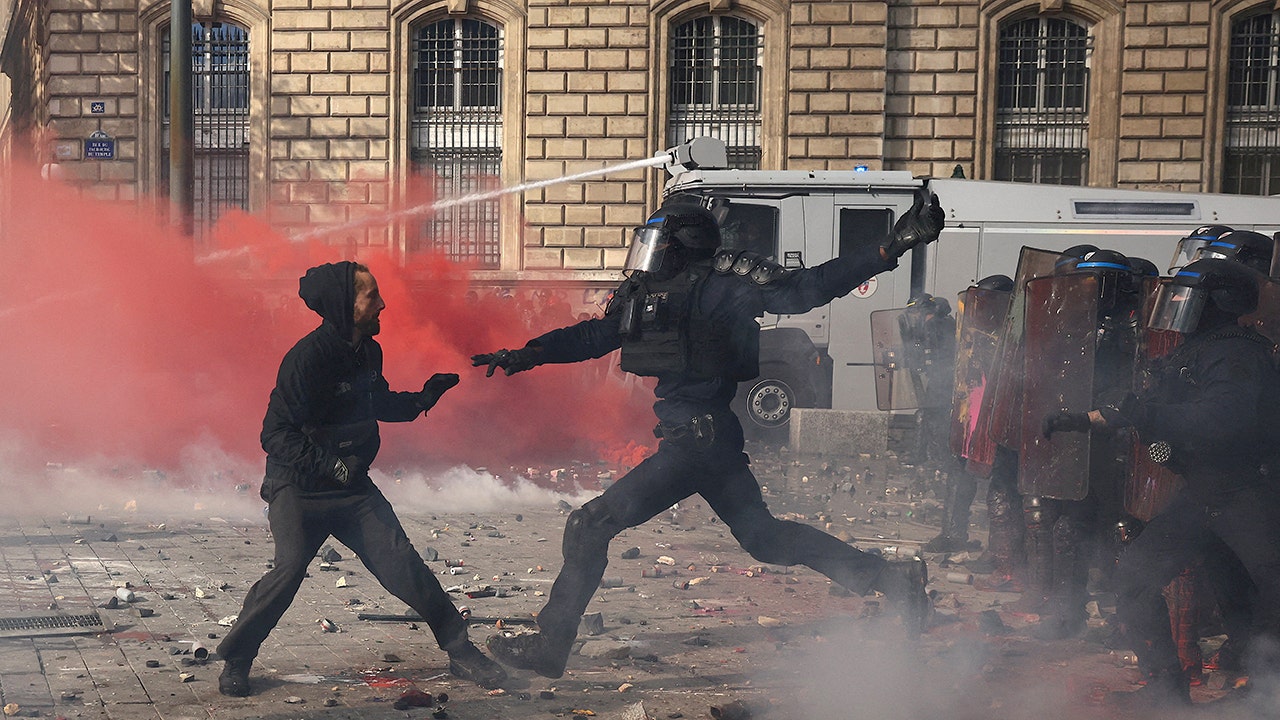
Protests in France have turned violent, with demonstrations across the country entering their fourth week. The unrest has led to the use of tear gas and water cannons by police to disperse violent groups.
What happened
President Emmanuel Macron has called for calm, stating that while young people have legitimate concerns, these are being exploited for political purposes and turned into urban violence. The interior ministry reported assaults on police, looting, and damage to public buildings, with at least 272 arrests nationwide.
The protests, which began over rising costs of living and education grievances, have spread to neighboring countries, including Belgium, Luxembourg, and Switzerland. In Belgium, several hundred mostly young people protested in Brussels, clashing with police.
According to the French justice ministry, nearly 8,000 people have been arrested since the protests began, with 937 police officers and 149 teachers and school staff injured. The national police union has filed a lawsuit against the government, citing contradictory orders and unclear instructions for officers deployed in the protests.
Student groups say they are protesting rising education costs and reforms that will make higher education less accessible. The French government has expressed hope that the protest movement will ease in coming days as schools nationwide are closed until November 2 due to the Toussain holiday.