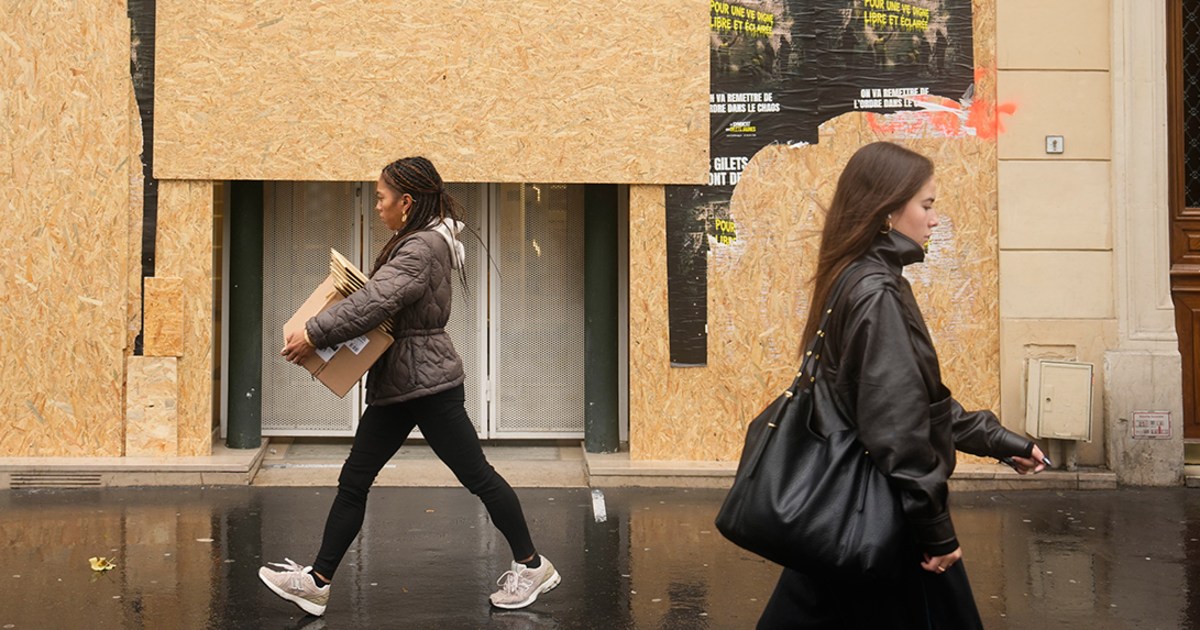
Protests swept across France on Saturday, with more than 100,000 people marching in Paris alone, to express their discontent with the government's handling of school funding and the rising cost of living.
What happened
The protests, which were largely peaceful, turned violent near the end point of the march in Paris, with some demonstrators throwing bottles and rocks at police, who responded with tear gas and water cannons. Similar clashes were reported in other cities, including Lyon, Marseille, and Strasbourg.
According to the Paris prosecutor's office, 64 people were arrested in connection with the protests, with 40 placed in police custody. The arrests were mostly related to suspected weapons offenses or participation in a group preparing violence or property damage.
The protests were organized by trade unions, student groups, and environmentalists, who are demanding better funding for schools, higher wages, and pensions. The movement, which began as a protest over staff shortages at a high school, has grown into a national movement, with thousands of people taking to the streets across France.
The French government has faced criticism for its handling of the protests, with some accusing the authorities of violating freedom of expression. The interior minister, Laurent Nuñez, had announced a nationwide deployment of up to 70,000 officers to maintain order, but the protests still turned violent in some areas.