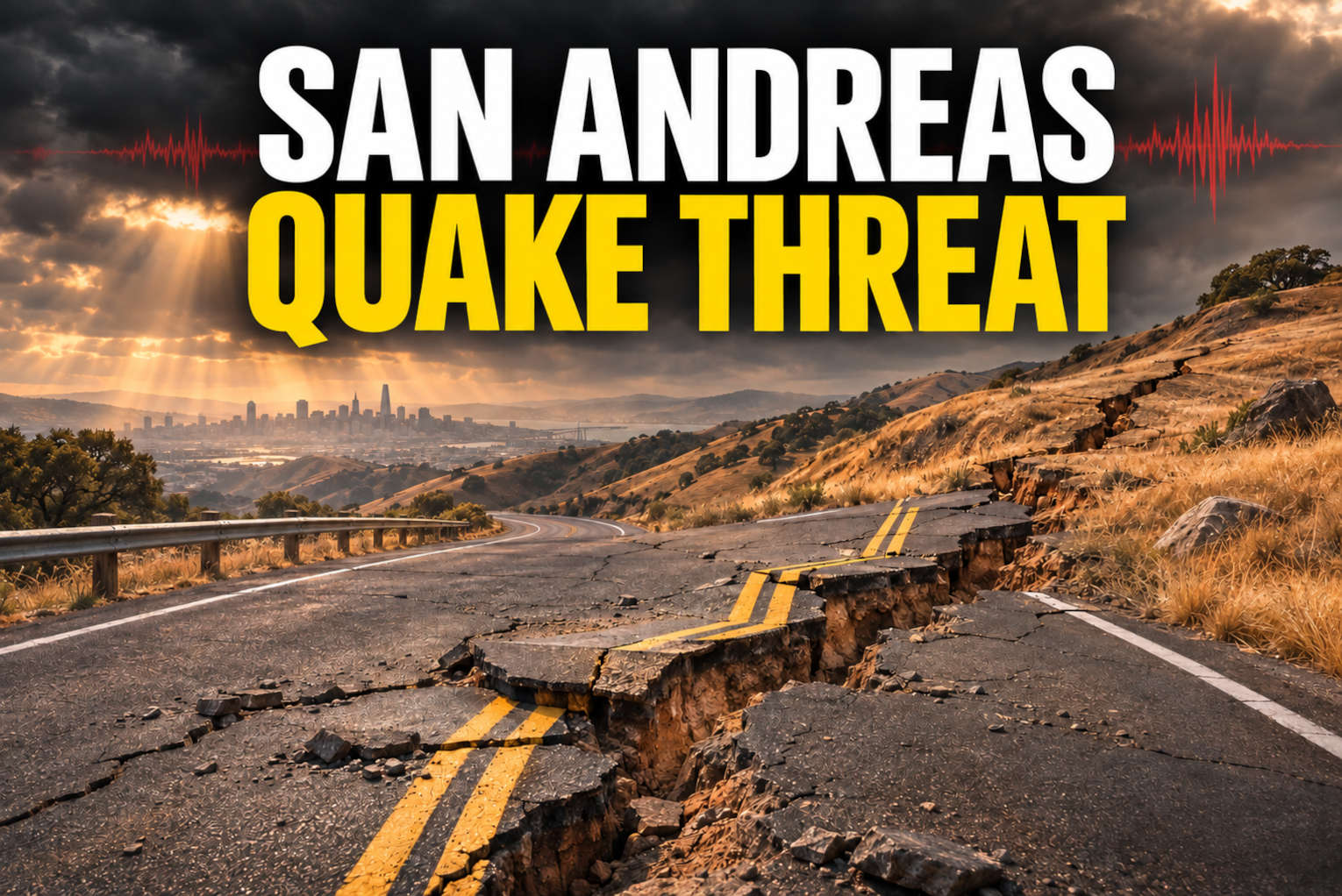
What happened
A series of small earthquakes struck Northern California, with over two dozen tremors reported within 24 hours. The earthquakes were minor, with the largest recorded at a magnitude of 2.7, approximately 4 miles northwest of The Geysers on November 2.
The US Geological Survey (USGS) and UC Berkeley reported the earthquake activity, which has raised concerns about the potential for a major rupture on the San Andreas Fault. The fault runs for hundreds of miles through California and is capable of producing a significant earthquake that could severely impact transportation and essential services.
According to the USGS, the Bay Area has a 74.1% chance of experiencing a magnitude 6.7 or stronger earthquake over the next 30 years. The San Andreas-specific probability within the Bay Area is 25.5%. However, the USGS notes that small earthquake swarms frequently occur without a larger earthquake following.
Researchers have identified conditions that could make a future earthquake especially destructive, including high stress levels along the southern San Andreas and San Jacinto faults. A study published this year modeled roughly 1,000 years of earthquake history and found that some present-day stress levels have reached or exceeded the highest values in the simulation.
A USGS planning scenario illustrates the potential consequences of a major earthquake, including damaged roads and rail lines, interrupted essential services, and widespread destruction. The scenario estimates approximately 1,800 deaths and $213 billion in economic losses, although these figures are based on a hypothetical scenario and not a prediction of an actual event.