What happened
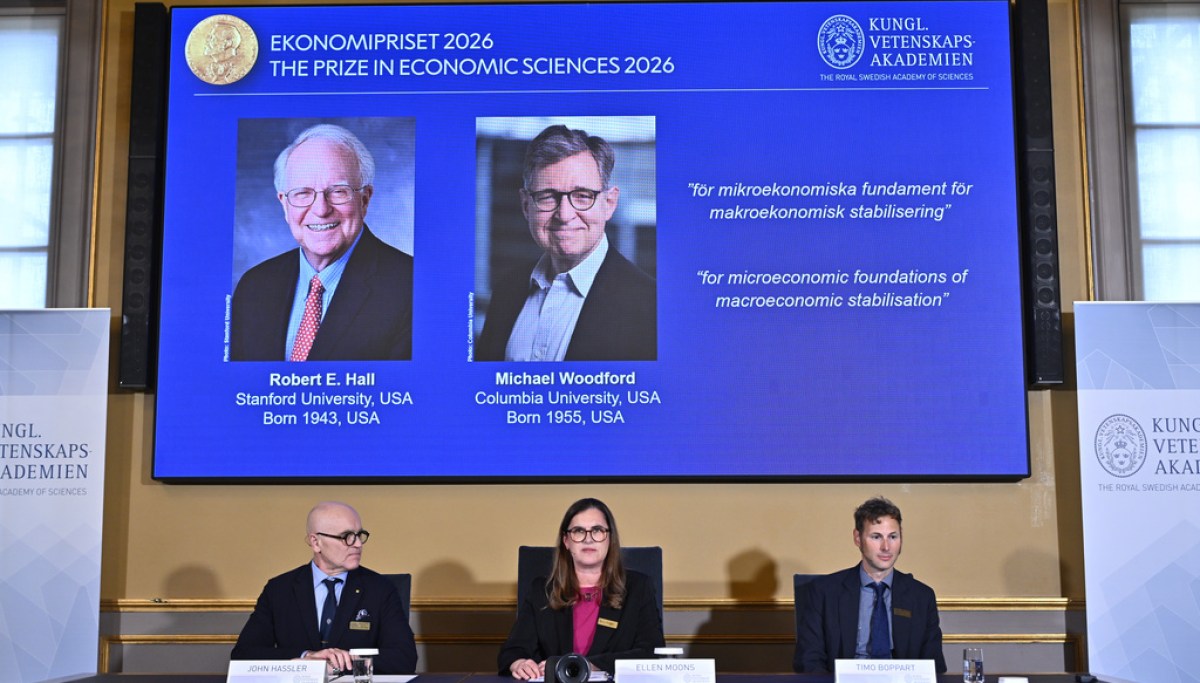
The Royal Swedish Academy of Sciences has awarded the Nobel Prize in Economic Sciences to two American economists, Robert E. Hall and Michael Woodford. They were recognized for developing a model that challenges traditional government responses to economic shocks. Their work focuses on microeconomic measures, which help to smooth out the economy's peaks and troughs.
The academy stated that Hall and Woodford's work has provided a stable theoretical foundation for models used by central banks and governments worldwide. Their models have helped governments better deal with sudden economic shocks and crises, such as energy crises or changes in household consumption.
Hall and Woodford's research analyzed the failure of Keynesianist government intervention during the 1970s stagflation period. They improved upon Keynes's model by incorporating micro-level factors, such as how individual households and businesses make decisions that affect the economy. The Nobel committee noted that their work has helped central banks and governments develop more effective stabilization policies.
The two economists argued that predictive models for government intervention should include microeconomic factors to understand how households and businesses make decisions. They also suggested that central banks can influence households' perspectives of the future through clear messaging about future moves, such as interest rate adjustments.
Hall and Woodford will share the prize of 12 million Swedish kronor, approximately $1.2 million.