





"Good Friday" & Resurrection Sunday Powerful Prophetic Word & Message!
- Brandon Dawson

- Apr 3
- 5 min read
I have a very important prophetic teaching and message to share with you guys concerning this specific Passover and Resurrection Sunday that many people have no idea even exists. Most of you guys have probably never even heard of this because it is not taught in mainstream Christianity, so in order to understand it, you have to go back into the Jewish historical context first.
Today, many churches across the nation are holding “Good Friday Services” where we remember the crucifixion of Jesus, often partake in communion, and of course are followed by Resurrection Sunday celebration services.
However, the actual crucifixion of Jesus did not occur on Friday, but in fact occurred on Thursday. And the actual resurrection of Jesus did not happen on Sunday but after sunset, at the end of the Sabbath, on Saturday. According to the Bible, that is when the new day begins, so technically it was Saturday, but biblically it was also technically Sunday.
The reason the church celebrates this on Friday and Sunday actually is not biblical, but was a result of an intentional and systemic move away from our Hebraic roots as the church expanded further into the Gentile nations.
In the first century, the earliest apostles and Christians did, in fact, operate according to the biblical calendar set forth in Leviticus 23. As the church expanded into Gentile regions, especially by the second century, there was a movement away from the Hebrew roots.
Instead of anchoring events to the 14th and 15th of Nisan, they began anchoring them to fixed weekly patterns in connection to pagan worship, especially Sunday gatherings. Sunday was known as the day of the sun, the sun god, also called "desolis."
From Scripture and historical texts, we understand that Jesus was in the tomb for three days, as prophesied by Jesus prior to His death and resurrection, and that this was tied to Jonah’s three days and nights in the fish.

But when we turn to John 19:31, the text reveals that the crucifixion occurs on the Day of Preparation, which falls right before the High Sabbath begins.
This is extremely important, and there is a massive critical difference here between the weekly Sabbath and the High Sabbaths.
The weekly Sabbath occurs on the seventh day of the week. That is Saturday. But it begins at sundown on Friday.
The High Sabbath is a special annual Sabbath which occurs in connection with the yearly feast Sabbaths and can occur on any day of the week. It does not have to fall on the weekly Sabbath and is tied into the prophetic feast days of the Lord, which there are seven of them: Passover, Unleavened Bread, Firstfruits, Pentecost or Feast of Weeks, Feast of Trumpets, Day of Atonement, and Feast of Tabernacles.
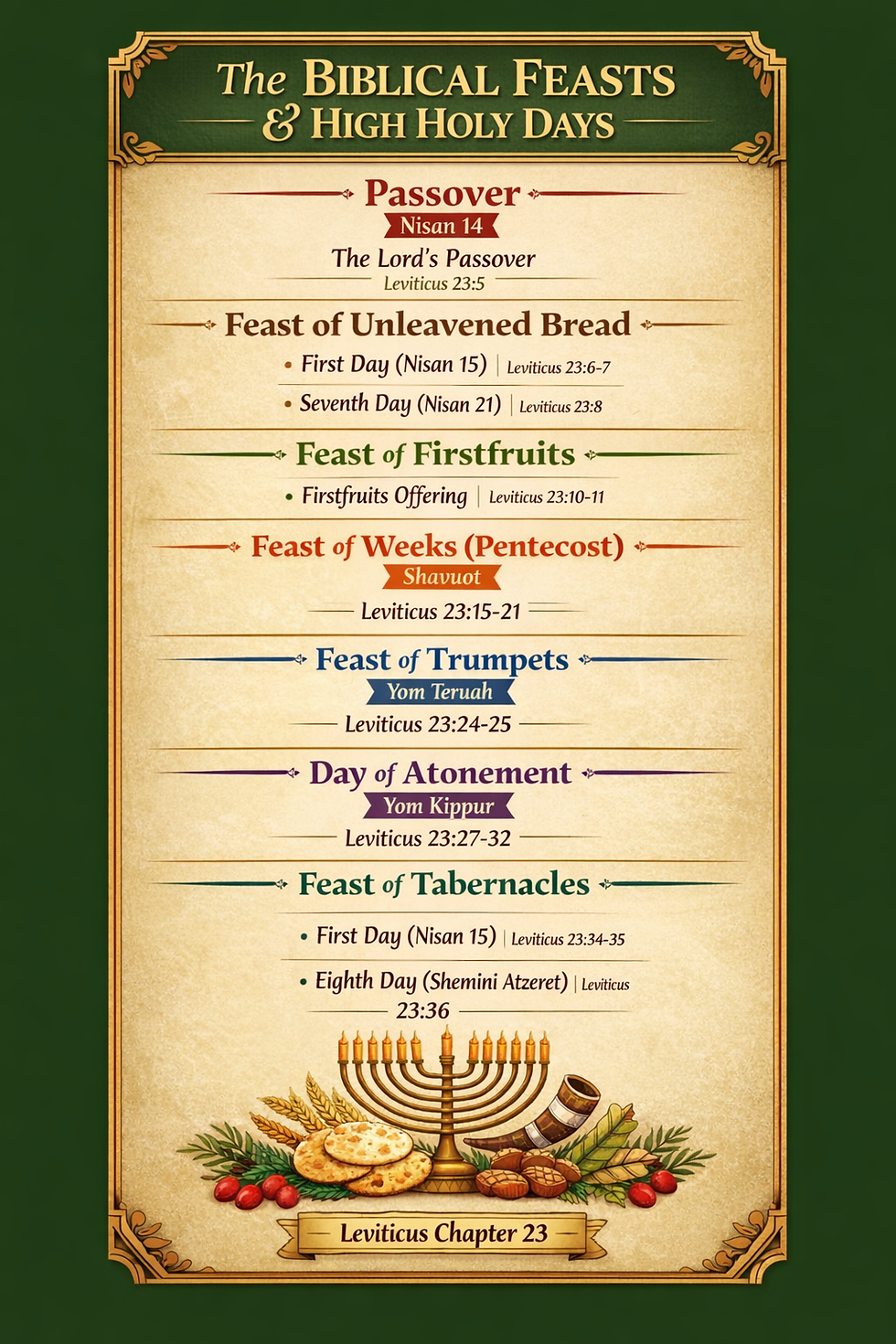
In each annual feast, there is one specific day appointed for the Sabbath of the festival.
For Unleavened Bread, there are two High Feasts that occur on the first and seventh days.
For the Feast of Weeks or Pentecost, the High Sabbath occurs on the same day, the fiftieth day.
The High Sabbath for the Feast of Trumpets occurs on the seventh month on the first day of that month.
The High Sabbath for the Feast of Tabernacles occurs on the first and eighth days.
So John is making a critical point to emphasize that Jesus was not crucified on the Sabbath. He was crucified just hours before the High Sabbath began, on the Day of Preparation. That would commemorate the Passover, the historical events tied to Israel’s redemption and deliverance out of the oppression of Egypt.
Now here is where we start getting into the prophecy.
When we get to Exodus 12 concerning the Passover events of Israel, God suddenly changes the entire calendar and order. Nowhere else in the entire Bible, or in all of history, does God literally change the time and calendar.
Exodus 12:2 says, “This month shall be the beginning of months; it shall be the first month of the year to you.”
So why did God do this? Why does it happen?
It is directly tied to the events of the flood and Noah’s ark.
According to Genesis 7:11, the flood begins on the second month, on the seventeenth day, and lasts for forty days and forty nights.
Then, when you get to Genesis 8:4, the Bible says the ark rested in the seventh month, on the seventeenth day, on the mountains of Ararat, which are in Turkey today.

It stays this way for approximately 857 years until we reach the Passover in the Exodus event.
So what was formerly the seventh month now becomes the first month, known in Hebrew as Nisan.
And when you compare the dates and occurrences of the flood to the crucifixion, resurrection of Jesus, and the Passover, a prophetic picture starts to form:
The Passover lamb occurs on Nisan 14.
Israel is delivered on Nisan 15.
Then three days forward, Nisan 17 is the day of resurrection, the day the ark rested. The same day, Jesus is resurrected.
And Jesus said in Matthew 24:36-44 that the last days, the days leading to not just the rapture of the church, but the seven-year tribulation period and His second coming, would be like the days of Noah and serves as a preparation call for the Bride of Christ to prepare, to watch: “Therefore you also be ready, for the Son of Man is coming at an hour you do not expect.”
Now fast forward to today, to this year. We are currently in the Hebrew year 5786.
How many years was it from Noah’s ark until God changed the calendar?
857 years.
All three of those numbers have matched the prophetic Hebrew calendar since September 29, 2019, correlating to the year 2020.

It has been six years, and we are currently in the Hebrew year 5786. The number 86 in Hebrew gematria has the exact same value as God’s name Elohim, the same name referenced during the creation week.
Now there is only one other instance when the calendar is changed. It is not done by God, but by Constantine at the beginning of the Roman Gregorian calendar, which begins with the birth of Christ, which now takes us to the current year 2026.
Take the number 26 for this current year, 2026. The gematria value of 26 is also the same exact gematria value of God’s name YHWH. This is the very first name in which God reveals Himself to Israel through Moses in the Exodus Passover events, when Moses asks God, “Who should I say sent me?” and God says, “I AM WHO I AM.”
So what does all of this mean?
In simple terms, it points to the redemption of the church, the rapture, the resurrection of the saints, which occurs at the same hour as the rapture, and the return of Christ, also known as the Second Coming.
Comments